
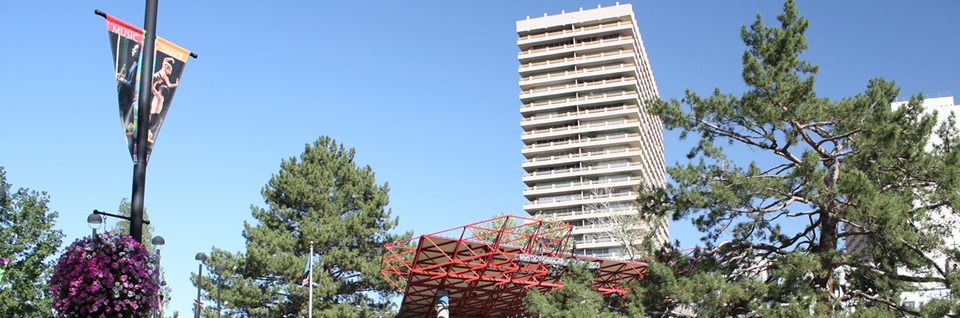
The Reno Redevelopment Agency Advisory Board is holding a special Workshop on Monday, June 15. This could be one of the most substantial discussions on Reno’s redevelopment future in decades. For real. Monday's session — June 15, 2026, 11:00 AM, Reno City Hall, 14th floor — isn't a typical agenda.
There are five business items, and they range from "here's how property tax works and why it matters" to "should the City Council keep running this thing the way it does?" None of them are quick conversations, which is why four hours have been alotted for this meeting. Some of these discussions could have downstream consequences for downtown Reno for the next decade or more.
Have I hooked you yet? Have I made participation in Reno’s redevelopment journey look enticing? I hope so, because this is also a MASSIVE chance for stakeholders and the public and downtowners to PARTICIPATE.
For those who truly want to learn about redevelopment tools, how property tax works, and the nuts and bolts of the redevelopment agency, this will be worth the watch.
Even if you just watch the recording after.
Here's a breakdown of each.
________________________________________
B.1: Property Tax 101
The first item on the agenda is a presentation from Applied Analysis on how property tax works in Nevada. The numbers in this presentation paint a picture that's directly relevant to everything the RDA does.
Property tax is the primary funding mechanism for the Redevelopment Agency. It makes up about 26.5 percent of the City of Reno's General Fund — roughly $82.9 million in fiscal year 2025 — and a full 69.2 percent of the Street Fund. So when property tax revenue grows, the RDA's tools grow. When it stagnates, everything gets harder.
Nevada's system has a few "quirks."
The state applies a depreciation factor to structures — 1.5 percent per year, maxing out at 75 percent after 50 years.
This means older buildings actually generate less taxable value over time, even if their market value is climbing. Nevada is reportedly the only state that applies a depreciation factor to residential buildings this way. In the City of Reno, 24 percent of all properties are already at or past that 50-year threshold, meaning they've hit the maximum depreciation and aren't contributing as much assessed value as you might expect based on market prices alone.
Looking forward, the data gets more pointed. Within 20 years, over half of all properties in the City's current inventory will be fully depreciated. Within 30 years, nearly three-quarters will be there. Applied Analysis is flagging this as a "fiscal cliff on the horizon" — a long-term structural challenge where the property tax base erodes unless new development and reinvestment replaces aging stock.
The total assessed value of all property in Washoe County was $32.5 billion in FY2025. About half of that — $16.4 billion — sits in the City of Reno. The City's assessed value is more diversified than its neighbors, with a relatively higher share of commercial and multi-family properties compared to Sparks, which skews more heavily residential.
Then there are the tax cap abatements — the 2005 law that limits how much a property's tax bill can increase in any given year. For owner-occupied residential properties, the cap is 3 percent annually. For commercial, it's 8 percent. In practice, this means the Reno median homeowner's tax bill is being reduced by about 32 percent compared to what would otherwise be assessed. That's a significant suppressor on RDA revenue growth.
The property tax rate in Reno is split across four entities: Washoe County gets $1.3917 per $100 of assessed value (38 percent), the school district gets $1.1385 (31.1 percent), the City of Reno gets $0.9598 (26.2 percent), and the State of Nevada gets $0.17 (4.6 percent). The total rate hits the legislative cap of $3.66 per $100 of assessed value exactly.
One other quirk: the City of Reno has the highest exempt property share of any major Nevada city — 12.2 percent of assessed taxes. UNR alone accounts for $694 million in exempt assessed value, which translates to roughly $25.4 million in taxes that don't get collected. The airport, the school district, hospitals, federal property — it all adds up to $2.18 billion in exempt value within city limits.
None of this is a value judgment on any of those exemptions. It's just context. The RDA operates in an environment shaped by all of these structural forces, and understanding the machinery is a prerequisite for understanding why the board is being asked to take actions on the other four items.
________________________________________
B.2: Should RDA 2 Live Past 2035?
Redevelopment Area 2 — the 740-acre zone that covers a big chunk of downtown Reno and slices of MidTown and East 4th (and Boomtown and GSR) — is set to expire in 2035. That's nine years away, which sounds like plenty of time until you remember the Great Recession ate about half the useful life of RDA2 already. AND consider a couple projects backed out or reduced their phasing because the window of getting property tax reimbursements within RDA is too short to cover funding gaps.
RDA 2 was created in 2005. Within a few years, the housing crisis hit, property values cratered, and tax increment revenues — the financial lifeblood of a redevelopment area — dropped below the tax base established when the area was formed. That means the RDA was generating negative increment for years. By FY21, revenues had finally crawled back to pre-recession levels. So out of roughly 30 years of total life, nearly a decade was essentially lost to the downturn.
The agency just didn't have the money to do much.
Staff is now asking the RAAB to recommend that the Reno City Council include an RDA 2 extension in its Bill Draft Requests for the 2027 Nevada Legislative Session.
BDRs have to be submitted to the Legislative Counsel Bureau by September 1, 2026, so the clock is ticking.
An extension would need to go through the state legislature — the RDA itself can't just extend its own life. And the City only gets two BDR slots per legislative session, so burning one on this is a significant commitment.
Applied Analysis ran three scenarios. The proposal being discussed is extending RDA 2 to 2050, a 15-year extension. The analysis modeled three different levels of what they call a "premium effect" — basically, how much additional assessed value gets generated because the RDA continues reinvesting in the area versus letting it go.
Under the most conservative scenario (1 percent premium above baseline growth), the extension would generate about $491.5 million in total RDA revenue from all taxing jurisdictions over the 2036–2050 period, with the City foregoing about $126.8 million in revenue it would otherwise receive directly. That's a 3.9x return on the foregone amount. The city would break even on that trade-off around year 25 after the extension expires.
At the middle scenario (3 percent premium), total RDA revenue rises to roughly $610.7 million, and the break-even point moves to about year 11.
At the highest scenario (5 percent premium), total revenue hits $754.3 million and break-even drops to about 7 years.
The numbers shift somewhat when converted to constant 2025 dollars, but the directional story is the same: the extension looks more attractive the more the RDA is able to generate growth above what would naturally occur without it.
It’s worth noting that the "premium effect" is an assumption. The analysis models what happens if continued RDA reinvestment generates above-baseline growth. Whether it actually does depends on how the money gets deployed — which loops back to the other agenda items about program quality and governance.
The staff recommendation is to support the extension. The RAAB is being asked whether it agrees and wants to recommend that recommendation to the RDA Board and City Council.
________________________________________
B.3: What Does "Best Practices" Actually Mean? SB Friedman Has Some Answers
SB Friedman Development Advisors — the Chicago-based firm that's become a familiar name in Reno's redevelopment conversations — is presenting a Redevelopment Best Practices Guide to the board on Monday. These are the same folks who've been hired to do third-party financial underwriting of TIF applications locally.
Their credentials are solid: they've reviewed more than 150 public-private financial transactions since 2020, serve as curriculum advisors for the Council of Development Finance Agencies' national TIF training program, and have completed TIF policy work in Albuquerque, Salt Lake County, and Little Rock, among others.
The presentation covers five broad categories of how TIF funds get used across the country.
Gap financing for private real estate. The core use case — a development project can't pencil financially without public help, so the RDA steps in to fill the gap. Tools include pay-as-you-go TIF, bonds, loans, and fee waivers. SB Friedman emphasizes that the key questions are whether the project advances public policy goals, whether it genuinely wouldn't happen "but for" the assistance, and how to structure the deal so the developer doesn't end up realizing above-market returns.
Gap financing for catalytic projects. Transformational projects — think major mixed-use developments, entertainment districts, large-scale infill — that have extraordinary costs justifying more substantial public involvement. The approval process is still project-by-project, but the scale and public benefit threshold are higher.
TIF- and municipally-funded programs. This is the programmatic side — small business assistance, façade improvement grants, placemaking programs, storefront activation. Rather than reviewing every project individually, the agency sets program rules, council approves the framework, and staff administers awards. Reno has several of these already (ReStore, ReSecure, the Retail Vacancy program). Best practices here include strong policy goals tied to community need, monetary tiers to categorize applicants, and consideration of a third-party nonprofit to help operate programs.
Strategic acquisition and facilitation of redevelopment. Agencies can buy land, assemble sites, and then put them back into productive use through competitive developer RFQ/P processes. Best practice is to do environmental due diligence before acquisition, ensure there's a clear public purpose, and use competitive processes to maximize outcomes rather than quietly negotiating with whoever showed up first.
Public infrastructure. TIF can fund parks, trails, transportation improvements, and facility upgrades. Best practices include combining TIF with federal or philanthropic dollars to stretch the budget, creating intergovernmental agreements where needed, and making sure the community is actually behind the investment.
A few points in the presentation stand out as particularly relevant to Reno's current situation.
On project selection: SB Friedman recommends a scorecard or community benefit matrix — they use Albuquerque's Metropolitan Redevelopment Authority as an example. Projects there must score at least 100 points across categories including sustainability, economic impact, placemaking, and diverse/local development team composition. That's a more structured approach than intuition-based review.
On predevelopment readiness: The firm advocates for reviewing applications later in the process when more is known — purchase agreements instead of just letters of intent, contractor cost estimates instead of back-of-envelope projections, actual lender term sheets instead of pro forma assumptions. They compare the appropriate standard of due diligence to "what a lender considering a construction loan would do." That's a considerably higher bar than "we have a concept."
On right-sizing assistance: Best practices suggest public financial assistance represents 10 to 15 percent of total development costs. Larger amounts may be warranted for extraordinary circumstances, but the public contribution should be the final layer of a project's capital stack — not the foundation.
On structuring deals: They flag a few mechanisms; Construction cost true-ups allow for recalibration of assistance if costs come in lower than projected. Upside-sharing provisions let the public sector capture a portion of above-anticipated project returns. They cite Kansas City's TIF Commission as an example of an agency that now builds participation rates directly into redevelopment agreements.
The presentation is framed as informational — a framework for discussion — rather than a direct recommendation on any specific policy. But it's clearly setting the table for the B.4 discussion that follows.
________________________________________
B.4: The Participation Programs Need an Upgrade — Here's What's Being Considered
This one's meaty. Staff is asking the RAAB to weigh in on a proposed overhaul of the RDA's Participation Programs and Processes — the rulebook that governs how the agency reviews and approves requests for TIF assistance, facade grants, and other participation activities.
The current framework was adopted in August 2024. It's less than two years old, but staff has already identified enough real-world experience to want to rework it substantially. The report from Bryan McArdle, Revitalization Manager, is candid about what's been observed: "Recurring challenges related to project readiness, incomplete or evolving financial information, inconsistent supporting documentation, underwriting assumptions, and applicant expectations regarding redevelopment participation."
The Monday discussion is organized around six broad areas. Here's what's being proposed:
Policy clarifications. This is the most consequential category. Key items include:
a) Eligibility standards for projects already under construction or completed
b) TIF-eligible pre-development activities and expenses
c) Prevailing wage applicability based on the scope of Agency participation
d) Obsolescence and extraordinary redevelopment condition adjustments
e) Clearer NRS 279.486 redevelopment findings and “but-for” benchmarks
f) Financial benchmarks and assistance caps
g) Policy guidance for expiring redevelopment areas and supplemental assistance
h) Acquisition, disposition, and Agency asset management policies
i) Project schedules, performance milestones, and accountability measures
j) Clarification of staff, RAAB, Agency Board, and Legislative Body roles
TIF-supported programs. ReStore, ReSecure, Small Walls, Retail Vacancy, etc.
Program Structure:
a) Refine general eligibility criteria for all programs
b) Clarify reimbursement and documentation standards
c) Add stronger completion deadlines and project performance standards
d) Clarify clawback and default provisions for non-conformance
e) Update building façade and tenant improvement program to identify all Agency Programs
TIF assistance applications. Discussion points include:
a) Consider adding a “Public Improvement Only” participation option
b) Moving away from a rigid scoring rubric toward eligibility, readiness, and
underwriting criteria
c) Removing applicant-requested TIF amounts and replacing with financial
feasibility narratives and pro forma requirements
d) Validated construction pricing (GMP or equivalent)
e) Detailed sources and uses including labor costs and prevailing wage impact
f) Defined project timelines and milestones
g) Site planning and design review coordination
h) Itemized public improvements and costs
i) Require Catalyst Projects to submit economic impact and market studies
j) Add formal expiration reapplication guidelines
k) Formalize consultant recovery costs
l) Clarify application review process and administrative review and denial standards
Acquisition, disposition, and asset management. The agency would establish clearer criteria for when and how it acquires property, clearer standards for how it values and leases publicly owned assets, and explicit performance milestones tied to disposition agreements.
Capital improvements and public improvements. Staff wants to develop a formal Capital Improvement Plan process, clarify how interlocal participation works when multiple agencies are involved, and establish cost-share practices.
And this is just a SHORT list. The RAAB isn't voting on a final document Monday. The ask is to discuss and provide recommendations that staff will incorporate into a revised framework for the Agency Board to formally adopt. But whatever direction comes out of this conversation is likely to shape what downtown Reno's development pipeline looks like for the next several years.
________________________________________
B.5: Who's Running This Thing, and Should That Change?
The last item on Monday's agenda is in some ways the most structurally fundamental: a discussion of RDA governance, how redevelopment authority is divided between the City Council and the RDA Board under Nevada law, and whether any of that should change.
To understand why this is on the agenda, you need to know one thing: in Reno, the same seven people serve simultaneously as the City Council and as the Redevelopment Agency Board. They're legally distinct roles with different authorities and different responsibilities — but they're filled by the same elected officials. The
RAAB has previously expressed interest in discussing whether that arrangement should continue.
Staff is presenting a detailed breakdown of what NRS Chapter 279 — Nevada's redevelopment law — actually says about who gets to do what.
The Legislative Body (City Council) retains certain baseline authorities that can't be delegated: creating the agency in the first place, appointing agency members, adopting redevelopment plans, approving the annual budget, and approving the establishment of any revolving fund. Crucially, the Legislative Body also has the authority to appoint up to 11 agency members from "resident electors of the community, members of the legislative body, or a combination thereof." That statutory provision is the legal mechanism that would allow the City Council to create a separate RDA Board without requiring a change to state law.
The Agency Board — once properly constituted and operating within an adopted redevelopment plan — has broad implementation authority: making contracts, acquiring and disposing of property, undertaking redevelopment projects, issuing bonds, hiring staff and consultants, administering TIF, and developing its own program guidelines.
The RAAB, by contrast, is advisory. It doesn't possess independent authority under NRS Chapter 279. Its role is to provide recommendations and public input on proposed projects and programs, or to propose projects and programs to the Agency Board for consideration. It holds regular public meetings. That's the scope.
Staff has prepared a comparative chart of peer redevelopment agencies across the country — Boise's CCDC, Denver's DDA, Milwaukee's RDA, Salt Lake City's RDA, Albuquerque's MRA, and others — with data on board structure, staff size, budget scale, whether they have advisory boards, whether they use eminent domain, and more. The chart shows significant variation. Some agencies are governed by city council acting directly as the board (Las Vegas, Phoenix). Others are appointed boards operating independently of the city council (Boise's CCDC, Albuquerque's MRA). Some are private nonprofits (Detroit's Downtown Partnership, Cincinnati's 3CDC, Philadelphia's CPDC).
Among the agencies in the comparison with formal advisory boards: Boise's CCDC has five advisory board members. Albuquerque's MRA has seven. Salt Lake City's RDA has seven. Denver's DDA has 11 members and no separate advisory board. Las Vegas has no advisory board. Portland's Prosper Portland has an appointed board separate from City Council.
Staff is not proposing a specific governance change in Monday's materials. The item is framed as an opportunity for the RAAB to discuss whether it wants to recommend governance modifications, clarify roles, establish delegation and authority policies, create contract approval thresholds, or request additional legal analysis. Any recommendations from the board on this item would go to the RDA Board for consideration.
What the board decides — or doesn't decide — on this question has implications that go beyond process. Peer cities that have moved toward independent boards have generally done so because they wanted more focused expertise and faster decision-making. Cities that keep the council in the board seat argue for accountability and coordination with broader city priorities.
Both structures have examples of success and examples of drift. The discussion Monday is about whether the board wants to put a formal recommendation behind any of these questions.
________________________________________
What to Watch
Monday's meeting starts at 11:00 AM at Reno City Hall, 14th floor. It's also on Zoom at https://links.reno.gov/RAAB06-15-26 for anyone who wants to follow along remotely. Public comment is open and limited to three minutes per person.
The five items above represent a lot of ground to cover in a single session. The property tax overview is primarily educational. The RDA 2 extension and the participation program updates both come with possible action motions — the board can make formal recommendations to the RDA Board if it chooses to. The governance discussion is more open-ended, though it could also result in formal recommendations if there's enough consensus.
For anyone who cares about what gets built downtown, who pays for it, and how those decisions get made — this is the meeting to tune into.